Your First Afternoon Watching a Test Match
A Test match viewing plan helps you follow one batter, spot field changes and use pauses to reset your attention without needing to track every ball.
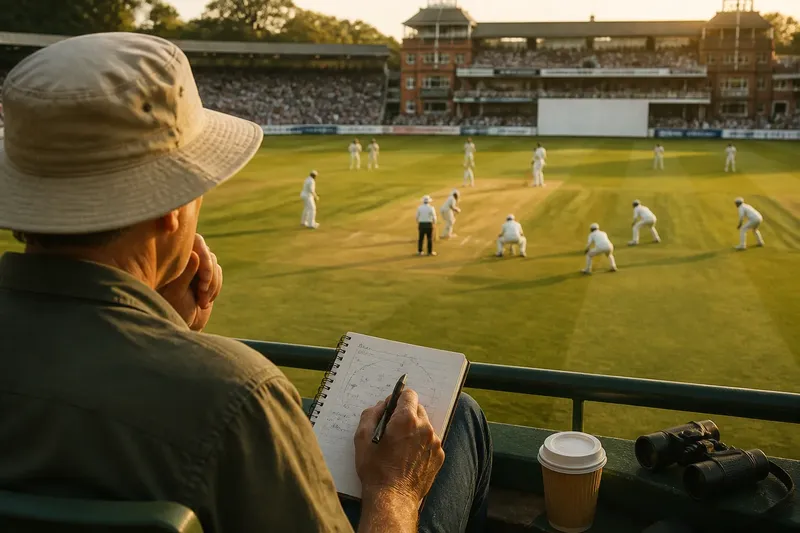
A Test match viewing plan can be as simple as choosing one batter and watching what changes around them. Settle in for a session, not the whole match: the point is to notice a few decisions taking shape, rather than to account for every ball as if an examination paper were due.
Which batter should you follow?
Pick someone who is already at the crease, preferably a batter whose decisions you can see clearly from your seat or screen. You need not choose the star. A player facing a new spell, returning after a short interruption or sharing the innings with a settled partner can offer a useful thread to follow.
Start with a plain question: what does this batter seem willing to play? Watch the stance before the ball, the first movement of the feet and whether the bat goes towards the ball or stays close to the body. You are not trying to diagnose technique. You are building a simple picture that makes the next adjustment easier to notice.
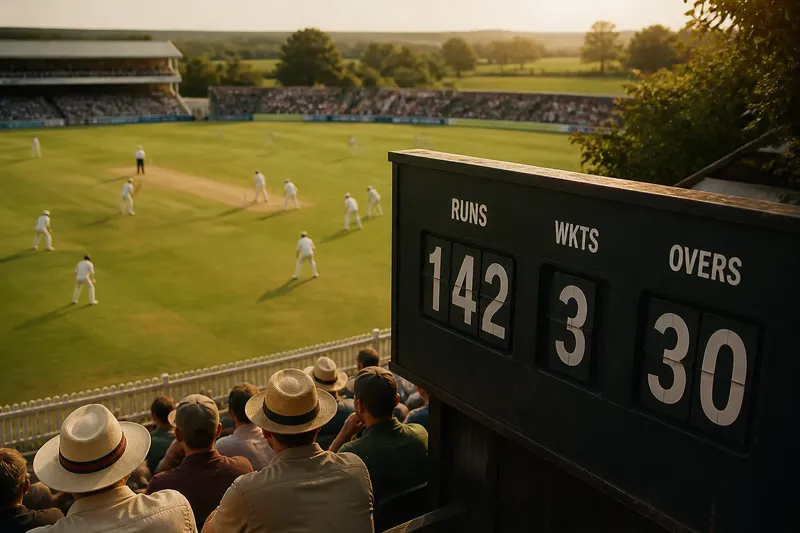
Keep the scoreboard in view, but do not make it your only guide. The same score can feel different when a batter has just arrived, when a partner has been dismissed or when a spell has become more disciplined. The context is often visible in the players’ choices before it is obvious in the numbers.
Choose one batter, then let the other details come to you.
What should you notice about the field?
Look at the field when the bowler is preparing to run in, and again after a ball that changes the conversation: a boundary, a near miss, a new batter or a change of bowler. You do not need to memorise positions. Notice where the captain has placed the nearest catchers, how many fielders are close enough to stop a quick single, and where the open space lies.
Then connect the arrangement to the batter you chose. If a fielder moves from a catching position to the boundary, ask what shot or risk the captain may be responding to. If a close fielder appears after a quiet stretch, the bowling side may be inviting a more ambitious stroke. These are readings, not certainties; cricket’s plans can be contradicted by one unexpected edge.
Watch for changes rather than trying to name every position at once. A move from a close-catching shape to a spread field is easier to interpret than a complete diagram in your head. The useful question is not “What is every fielder called?” but “What has changed, and what might that change encourage?”
One move can tell you more than a static field.
How can you follow a spell without counting every ball?
Listen for rhythm. A bowler may repeat a similar line and length, vary the angle, or pause longer before delivering. The batter may begin to step across, leave more deliveries, or look to score through a particular gap. A spell becomes easier to follow when you notice a pattern and then watch for the moment either player alters it.
Try giving each short stretch a question. Is the bowler asking the batter to defend? Is the batter trying to make room? Has the field changed to protect a scoring area? One question is enough; a running commentary on every detail can make a quiet session feel like unpaid clerical work.
Imagine you begin watching as a right-handed batter settles against a bowler working around the off stump. You notice the batter leaving several balls, then see a fielder move back towards the boundary on the off side. You might infer that the fielding side is guarding a likely scoring shot, then watch whether the batter changes their approach. The inference is provisional; the next delivery may offer no answer at all.
What do the pauses tell you?
Test cricket provides natural breaks: the end of an over, a change of bowler, a wicket, an interval or a delay. Use one to reset attention. Look at the score, identify who is facing, and check whether the field or bowling plan has changed since you last looked properly.
At an interval, avoid trying to reconstruct every ball you missed. Instead, note the current state in ordinary terms: which batter is established, what the bowling side appears to be trying, and where the field is concentrated. When play resumes, watch for whether those conditions hold. This gives you a fresh starting point without turning the afternoon into a memory test.
If the match is being watched at home, a pause is also a good moment to step away from the screen. If you are at the ground, take in the whole field rather than staring at the boundary screen. A short reset can make the next passage easier to follow than a determined effort to remain attentive through every quiet minute.
What questions help a first session make sense?
Do I need to understand every cricket term?
No. Learn a term when it explains something you have just seen, such as why a fielder is close to the bat or why a batter has left a ball. A small vocabulary attached to visible events is easier to keep than a glossary detached from play.
Should I follow the ball or the batter?
Follow the ball during the delivery, then look back to the batter and field between balls. That alternation shows both the immediate contest and the adjustments made in response to it. Watching only the ball can hide the plans; watching only the field can make the action rather abstract.
What if nothing seems to happen for a while?
Quiet passages are part of a Test session, not evidence that you have missed the plot. Pick one small cue: the batter’s movement, the bowler’s repeated target or the fielder who has shifted. If none changes, enjoy the pause in the action rather than inventing one.
When should I check the score?
Check at a natural break or after a wicket, boundary or notable change in the field. The score can confirm what the session has been doing, but it cannot explain every decision. Use it as a reference point, then return to the players.
How should you finish the afternoon?
Before leaving or switching off, take a moment to state what changed. Perhaps the batter began by defending and later looked for runs, or the field moved from close catchers towards boundary protection. You do not need a verdict on who is winning; a clear observation about the session is a perfectly respectable result.
For your next Test match viewing plan, follow a different batter or watch how a bowling change affects the field. Keeping one thread at a time lets the match stay spacious: you can notice a plan forming, miss a few deliveries without consequence and return when the players give you something new to watch.